

Publications & Reports
-
Precarity at the Housing–Water Nexus
Authors: Lucy Everitt | Katie Meehan
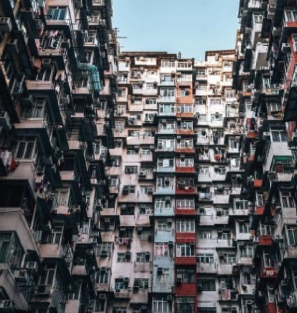
What produces a twinned crisis in housing and water insecurity? And what are the driving forces, hidden connections, and lasting implications? In this chapter, we introduce the idea that ‘precarious housing’ is a relational condition, intertwined with the supply and provision of other life-giving infrastructures and services—including (but not limited to) access to running water and sanitation. We illustrate fundamental concepts, key political-economic mechanisms, and signature examples of precarity at the housing-water nexus. We develop a typology of housing-water precarity, drawing on a spectrum of conditions across diverse geographic contexts. In contrast to notions of precarity as a technical failure or sectoral oversight, we argue that a critical geographic perspective is essential to identifying the production of precarity in housing and water and to situating relations of housing precarity as broader systemic issues of social and environmental injustice.
-
Access Denied: A Critical Review of Water Service Shutoffs Under Financialized Capitalism
Authors: Lucy Everitt | Katie Meehan | Holly Isard | Jhesset Thrina Enano
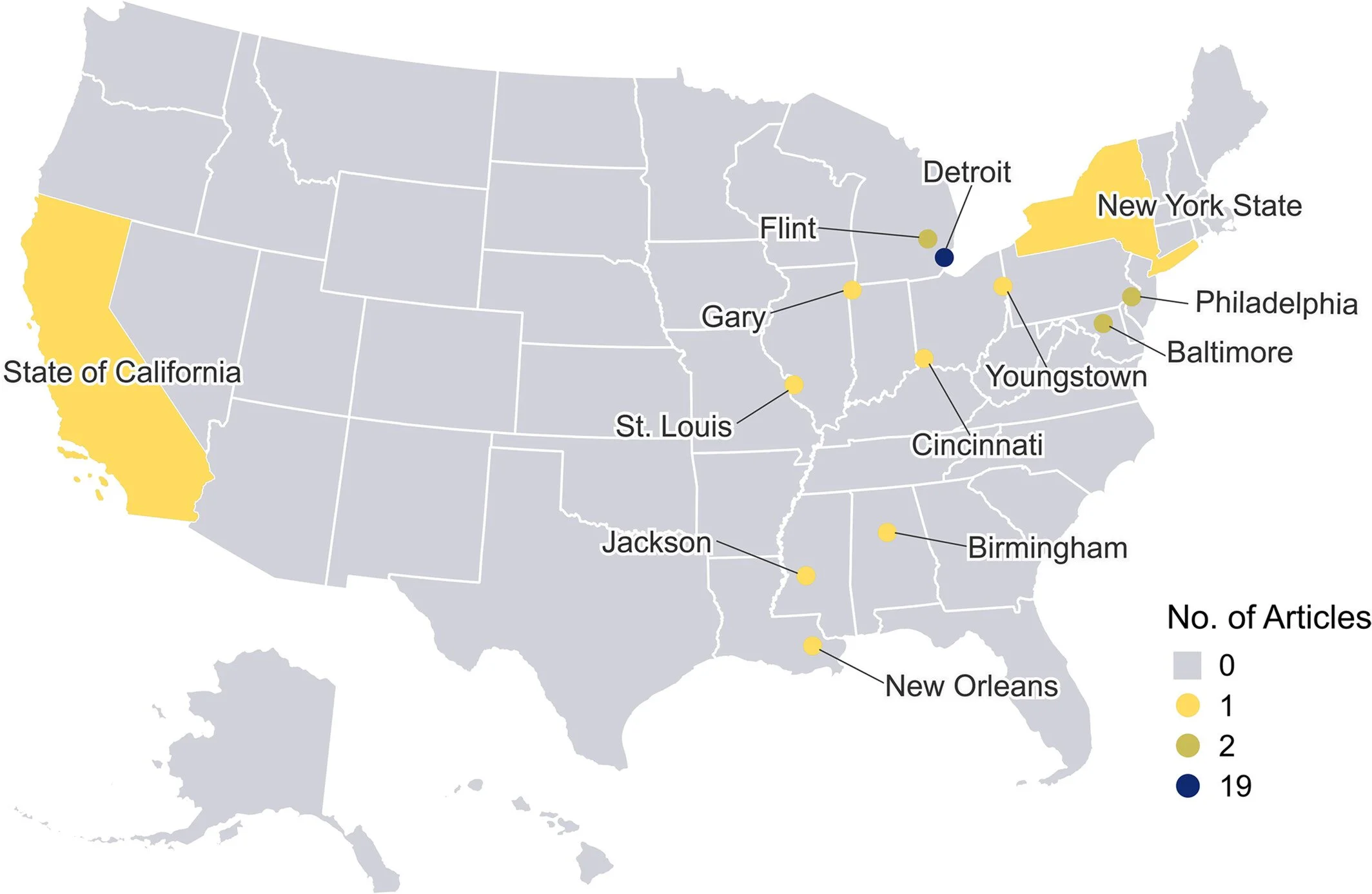
This article presents results of the first scoping review and critical analysis of peer-reviewed research on water shutoffs at the global scale. We identify three primary ways that scholars have understood water shutoffs: (1) as mechanisms for enforcing debt-driven governance; (2) as technologies of racialization and social discipline; and (3) as sites of social organization and struggle. We argue that the problem must be understood within the context of financialized capitalism and its predatory reliance on household social reproduction—in effect, shutoffs produce a new waterless class. We outline key priorities of a new research agenda, including the intersection of water shutoffs with health, housing, and climate change, and note the impossibility of achieving universal access to water (SDG 6) without reckoning with utility shutoffs.
-
New Evidence Links Tap Water Avoidance to Distrust and Water Insecurity in Dublin, Ireland
Authors: Fraser Curry | Katie Meehan | Méabh Temple
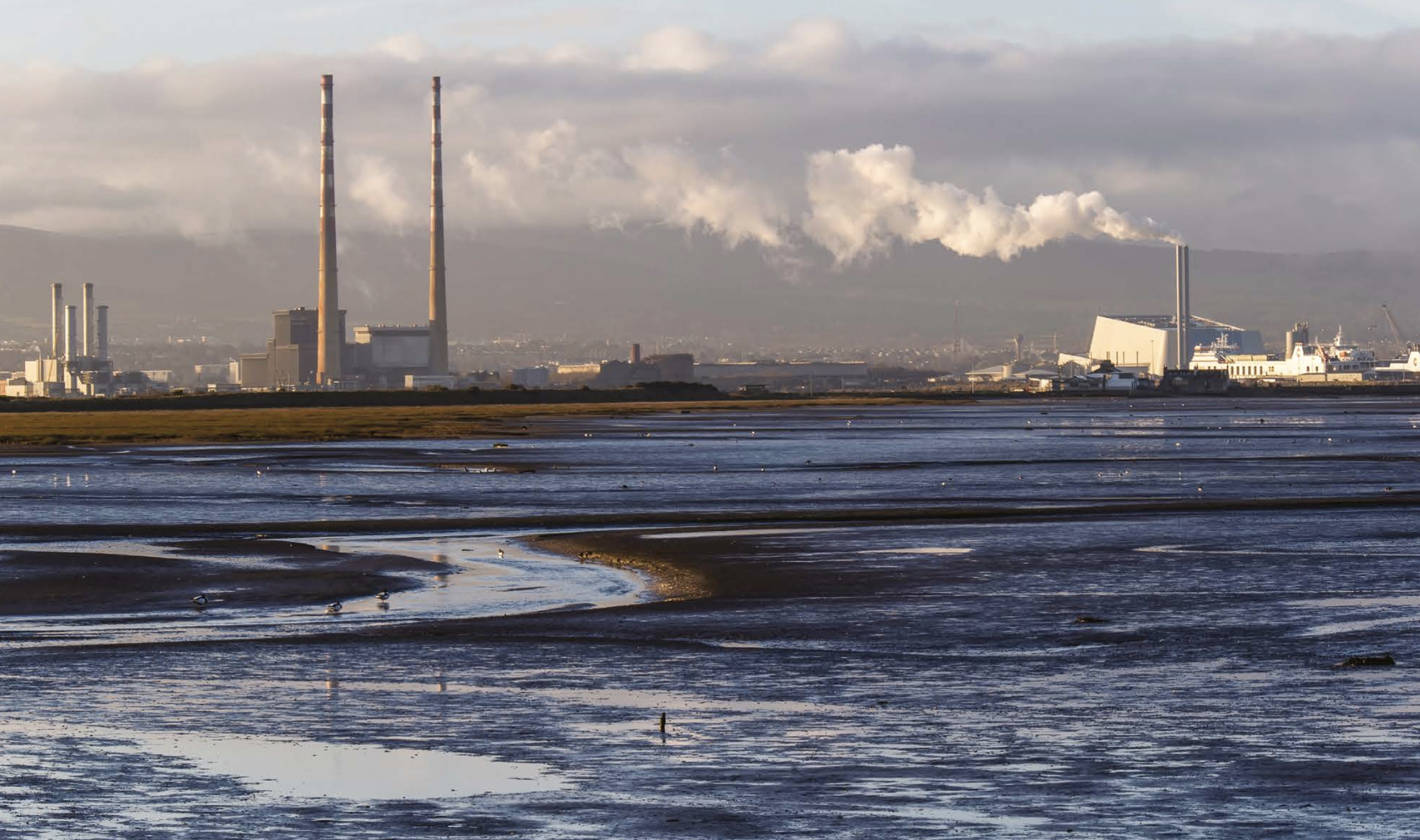
This policy brief presents new evidence of hidden water insecurity in Dublin. Drawing on household surveys and interviews, the research shows how ageing infrastructure and concerns about water quality are contributing to distrust in the public water supply, leading some households to avoid tap water and rely instead on bottled water. This reliance creates significant financial, physical, and mental burdens, particularly for lower-income households, challenging assumptions that near-universal piped water provision equates to secure and affordable water access.
-
Water Shutoffs and Extreme Heat in New York City: A New Frontier for Climate Justice
Authors: Lucy Everitt | Katie Meehan
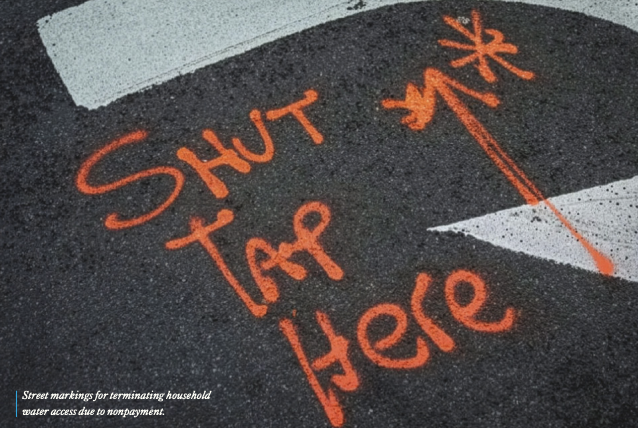
As extreme heat becomes the “new normal” in New York City, household water shutoffs pose a deadly threat to public health and mental well-being, especially for low-income residents seeking cooling options during a cost-of-living crisis. Despite New York State’s constitutional guarantee of the right to clean water, the NYC Department of Environmental Protection shuts off household water service due to nonpayment of utility bills, even during life-threatening heat waves. New consumer protections introduced by New York State Public Service Commission in 2026 are inadequate, leaving critical gaps that fail to protect low-income households. We outline steps to transcend this urgent policy gap and suggest policy reform that enshrines climate justice for all.
-
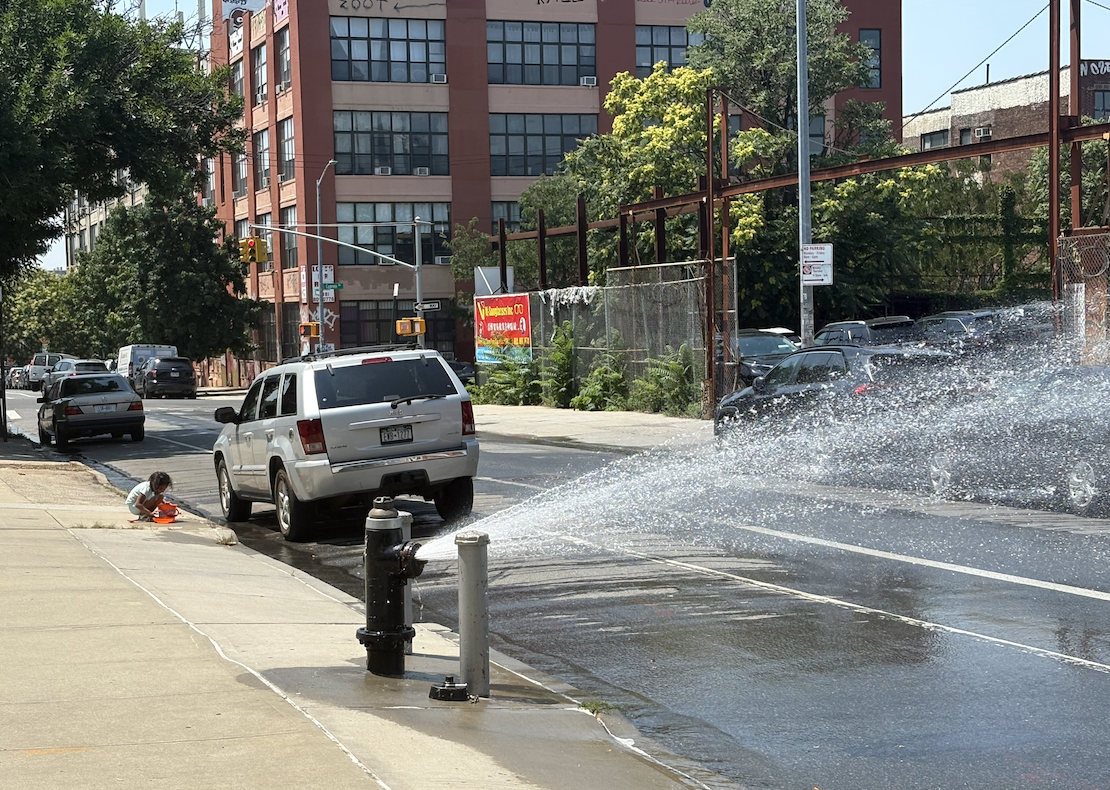
Why water security matters to cities under extreme heat in the Global North
Authors: Hug March | Katie Meehan | Elena Domene | Mar Satorras | David Saurí
Household water security is a key avenue for adapting to extreme and chronic heat, particularly in cities. In this Comment, we argue that household water security is far from universal in the urban Global North, resulting in uneven capacities and strategies to adapt to heat, outside and within the home. We synthesize key insights to advance water security as a central plank of urban heat justice.
-

Urban inequality, the housing crisis and deteriorating water access in US cities
Authors: Katie Meehan | Jason R. Jurjevich | Lucy Everitt | Nicholas M.J.W. Chun | Justin Sherrill
This Article presents a longitudinal analysis of household access to running water—a vital component of social infrastructure—in the 50 largest US cities since 1970. The results indicate that water access has worsened in an increasing number and typology of US cities since the 2008 global financial crash, disproportionately affecting households of color in 12 of the 15 largest cities. We provide evidence to suggest that a ‘reproductive squeeze’—systemic, compounding pressures on households’ capacity to reproduce themselves on a daily and societal basis—is forcing urban households into more precarious living arrangements, including housing without running water. Our insights reveal that plumbing poverty is expanding in scope and severity to a broader array of US cities.
-

Water shutoffs, social reproduction, and the carceral state
Authors: Katie Meehan
Water service shutoffs are cast as a vital ‘tool’ for water utility governance in the USA; yet their growing use raises questions about the welfare state and life-affirming infrastructure provision. This article uses water shutoffs—arguably the evictions of the water world—as a prism to examine the extension of carceral power in the sphere of social reproduction. In analyzing shutoff practices in US cities, the article finds that household water access is increasingly weaponized as a ‘police structure’ to preserve a model of debt-driven water management, in ways that also produce a spatial and racial division of nature.
-

Plumbing poverty in US cities: A report on gaps and trends in household water access, 2000 to 2017
Authors: Katie Meehan | Jason R. Jurjevich | Alison Griswold | Nicholas M.J.W. Chun | Justin Sherrill
An open-access research report on emerging trends and persistent gaps in household water access in 15 major US metros from 2000 to 2017. The study identified racialized disparities, compared trends between cities over two decades, and pointed to worsening conditions for urban dwellers, especially renters. Profiled three case studies: San Francisco, CA, Phoenix, AZ, and Milwaukee, WI.
-

Geographies of insecure water access and the housing-water nexus in US cities
Authors: Katie Meehan | Jason R. Jurjevich | Nicholas M.J.W. Chun | Justin Sherrill
Published in PNAS, we introduced the ‘housing-water nexus’ in the first study of household water access in the 50 largest US cities. In 2017, households without running water were more likely to be headed by people of color, earn lower incomes, rent their residence, and pay a higher share of income toward housing costs. We established that gaps in urban water provision are underpinned by precarious housing conditions and systemic racial inequality.
-

Plumbing poverty: Mapping hot spots of racial and geographic inequality in US household water insecurity
Authors: Shiloh Deitz | Katie Meehan
The flagship article of the Plumbing Poverty project, published in the Annals of the American Association of Geographers. We introduced the concept and methodology of plumbing poverty to examine the intersectional nature of infrastructure, space, and social inequality. In analyzing millions of household microdata records, we identified hot spots of plumbing poverty across the USA, tracked its social and spatial variance, and exposed its racialized nature.